
October Roots
Wed October 2nd



Today looks like a wonderful day for a book club gathering; but the last one was good enough to end the year on.
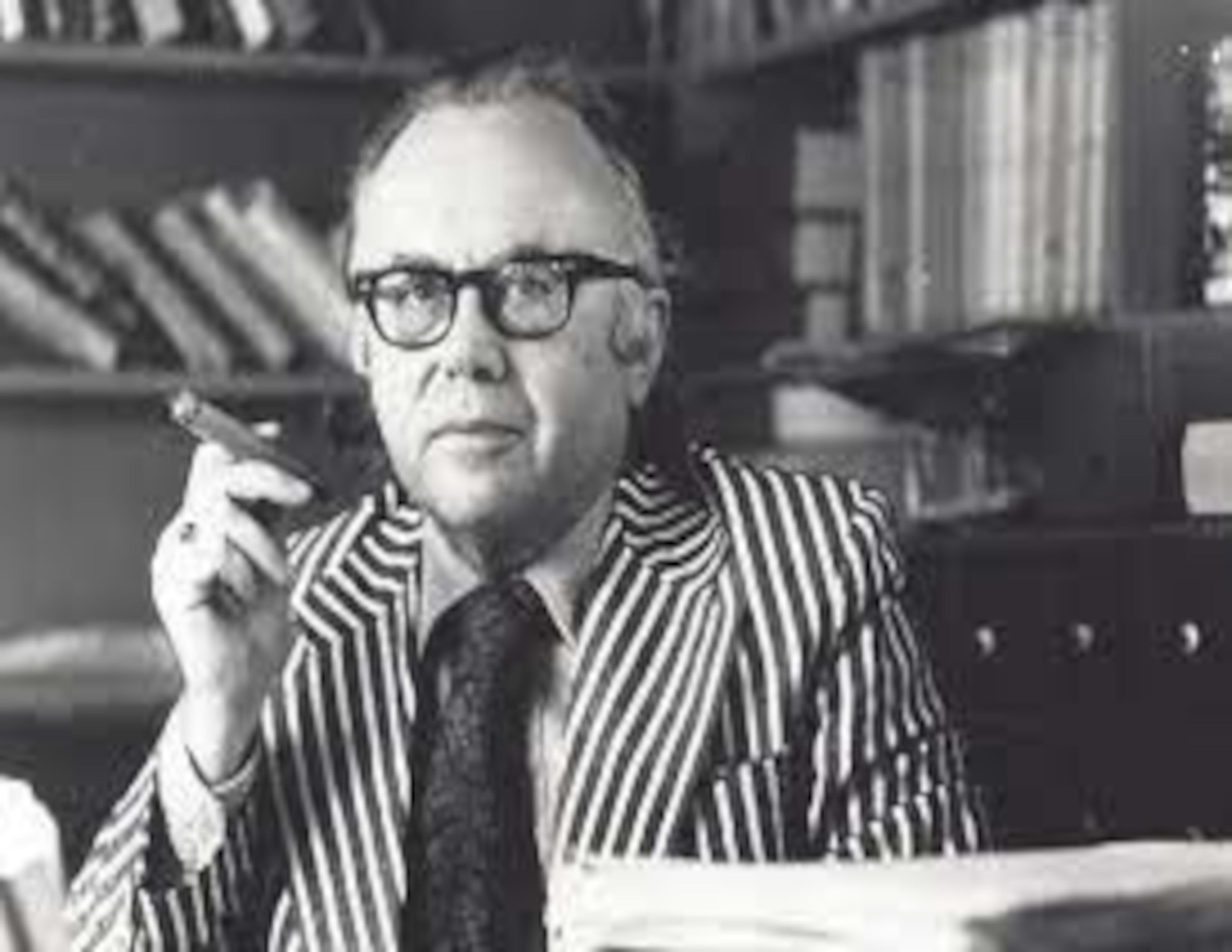
Russel Kirk R.I.P.
In the next issue of national review we will pay appropriate tribute to a figure whose death on April 29 left the conservative community desolate. He was omnipresent, coming at us from every direction. He wrote a seminal book and, for many years, a syndicated column. He lectured, gave speeches, wrote ghost stories and histories, and edited anthologies. Through it all maintained a special presence as ever so faintly bohemian, the orthodox husband of a beautiful wife, father of four daughters, obdurately professorial in demeanor, yet those who noticed never needed to wait too long before catching the wink, in what he said, and did.
Much of all this in the issue to come, so that here, we pause merely to remark his loss, reach out our hands to one another, expressing our shared grief.
Our own association with him-and I clutch in here to the personal mode-is older than the life of National review. I had of course read his important book, but I had not met Russell Kirk. The publication of National Review was now anticipated, to begin about a year later, and the time had come to meet him.
It was in the fall of 1954; I made the date, and flew to Michigan. I had a single objective, and I greatly feared that I would fall in it. I desired that Professor Kirk would consent, beginning with the opening issue, to contribute a regular column to National Review on doings in the academic world.
I confess I was very nervous. Although Russell was only a few years older, at 28 I felt that an entire world lay between us, the wide gulf between his learning, and my own.He was then a Bachelor, and shortly after I arrived to stay as a guest at his house, Piety Hill, he took me to dinner at a neighborhood restaurant, where he promptly ordered two Tom Collinses. Emboldened by his warm aloofness which was his trademark, I put it to him directly, and his reply was instantaneous: Yes, he would write a regular column for my prospective magazine.
I was so elated by his spontaneous and generous willingness to associate his august name with that or a wizened ex-schoolboy known mostly for an iconoclastic screed directed at his alpha mater, that I took to ordering more Tom Collinses, but in every case, one for each of us. The evening proceeded toward a pitch of such hilarity that, at midnight, I was barely able to drive the car back to Russell's house. On arriving, he led me to my bedroom, bade me good night only one second before i collapsed into my bed, to rise seven hours later and bump into Russell Kirk-only then emerging from his study. He had, in the interval since dinner, written a chapter of his history of St. Andrews University, and would catch a little sleep after he served me breakfast.
In the ensuing 25 years he never missed a deadline, At his wedding to the woman his readers resigned themselves finally to acknowledging as "The Beauteous Anette" I thought that possibly the most useful I might give him would be a honeymoon's-length moratorium from his column, since he was off to Scotland. I stammered out the proposal to him moments before he ascended to the altar. He acknowledged it by reaching into the pocket of hie morning coat and presenting me with-four columns. Perfectly typed. Perfectly edited. Perfectly executed. Not many had more direct, week-by-week knowledge of the extraordinary professionalism of Russell Kirk, which matched that of samuel Johnson and G.K. Chesterton.
He served us notice, a few months before our 25th anniversary in 1980, that he would discontinue his column at that point. He gave no reason for doing so, and questions weren't asked. A.J. Nock had recalled that Thoreau abandoned his pencil factory after he had achieved the exemplary pencil. What was there left to do? In the ensuing fourteen years Russell Kirk wrote many books and a hundred essays, gave a thousand speeches, and influenced the lives of another half-generation. His last day, he rose, breakfasted, sat down in his armchair, exchanged words with his wife and two of his daughters, closed his eyes, and died. few have repaid their debt to their family, their country, and their faith so extravagantly.
- William F. Buckley
————————
This year is the 50 year anniversary of the publication of The Roots of American Order, so here are some books about the book:
Kirk’s Constitution: From the Roots to the End of American Order?
by Bruce P. Frohnen
Kirk’s American Founding Documents and the Unwritten Constitution
by Gary L. Gregg II
by Daniel Pitt
————————
Alan Cornett, who used to be Kirk’s assistant, recommends celebrating Kirktober, so named for Kirk’s birthday and his Penchant for ghost stories and Halloween, by reading Old House of Fear.
————————
Tidbits
From The Wandering Scholars, by Helen Wadell
“Jean de St. Gilles, preaching to the University:
‘It is to be observed that the Mother of the Lord suffered him not to be in the schools, save three days only, nor was he Magister save for three years and a half; and in this are those rebuked who dally forever in the schools.’”
——
The 28th Virginia Battle Flag
The 28th Virginia battle flag is a Confederate battle flag that belonged to the 28th Virgina Infantry Regiment. Captured by the 1st Minnesota Infantry Regiment at the Battle of Gettysburg, the flag was brought to Minnesota and exhibited at the state’s capitol for several years before passing into the permanent collection of the Minnesota Historical Society after 1896 where it has remained since. Although various groups in Virginia have requested that the flag be returned, beginning as early as 1960, Minnesota has repeatedly declined to return it, with Governor Jesse Ventura (serving 1999–2003) asking "Why? I mean, we won."
——
Twin Cities Civil War Round Table:
https://tccwrt.com/
————————
FIN